Dissocial Personality: Meaning, ICD-10, ICD-11, Symptoms, and ASPD Differences
If you searched for dissocial personality, you may be trying to decode a term that appears in clinical notes, ICD language, psychology articles, or online discussions about antisocial personality disorder. The word can sound technical and alarming, especially when it is mixed with "sociopath," "ASPD," or "dissociative personality." This guide explains what dissocial means, how dissocial personality disorder was used in ICD-10, why ICD-11 changed the framework, and how the concept overlaps with ASPD. If you are reflecting on behavior patterns in yourself or someone close to you, a private ASPD traits screener can be one educational starting point, but it is not a clinical diagnosis.

What Dissocial Personality Means
"Dissocial" means a pattern that is seriously out of step with social obligations, other people's rights, and expected responsibility toward others. In mental health classification, the word has been used to describe a cluster of traits that may include callousness, irresponsibility, deceitfulness, repeated rule breaking, low remorse, and difficulty learning from negative consequences.
That does not mean every rude, detached, selfish, or conflict-prone person has a personality disorder. A personality disorder label is considered only when patterns are persistent, inflexible, impairing, and visible across multiple parts of life. Context matters: age, substance use, trauma history, mood disorders, stress, brain injury, and cultural expectations can all affect behavior.
In everyday search language, dissocial personality often points to the same broad territory as antisocial personality disorder, or ASPD. The difference is mostly about classification systems and wording. "Dissocial personality disorder" is an ICD-10 term. "Antisocial personality disorder" is the DSM term most familiar in the United States. "Sociopath" is a popular term, not a formal DSM label.
Dissocial Personality Disorder in ICD-10
ICD-10 used the term dissocial personality disorder for a specific personality disorder category. The commonly described criteria centered on a persistent disregard for social norms and for the feelings and rights of others. Clinical descriptions often mention callous unconcern, irresponsibility, difficulty maintaining stable relationships, low frustration tolerance, aggression, lack of guilt, and a tendency to blame others or rationalize harmful behavior.
These criteria were not meant for casual labeling. They were part of a broader clinical assessment, usually involving history, current functioning, risk, substance use, co-occurring mental health concerns, and information beyond a single self-report. In many systems, this label was not applied before adulthood. Childhood conduct problems could be relevant history, but adult evaluation required more than one troubling behavior or one painful relationship.
For readers, the most useful takeaway is simple: ICD-10 treated dissocial personality disorder as a formal category. It was not just another word for being antisocial in the everyday sense of being shy or preferring time alone. It referred to repeated behavior that may harm relationships, responsibilities, safety, or the rights of others.
How ICD-11 Changed the Language
ICD-11 moved away from many separate personality disorder types. Instead of making "dissocial personality disorder" a stand-alone category, ICD-11 uses a broader personality disorder framework based on severity and trait domain qualifiers. In that model, dissociality can be one trait domain among others, alongside domains such as disinhibition, detachment, negative affectivity, and anankastia.
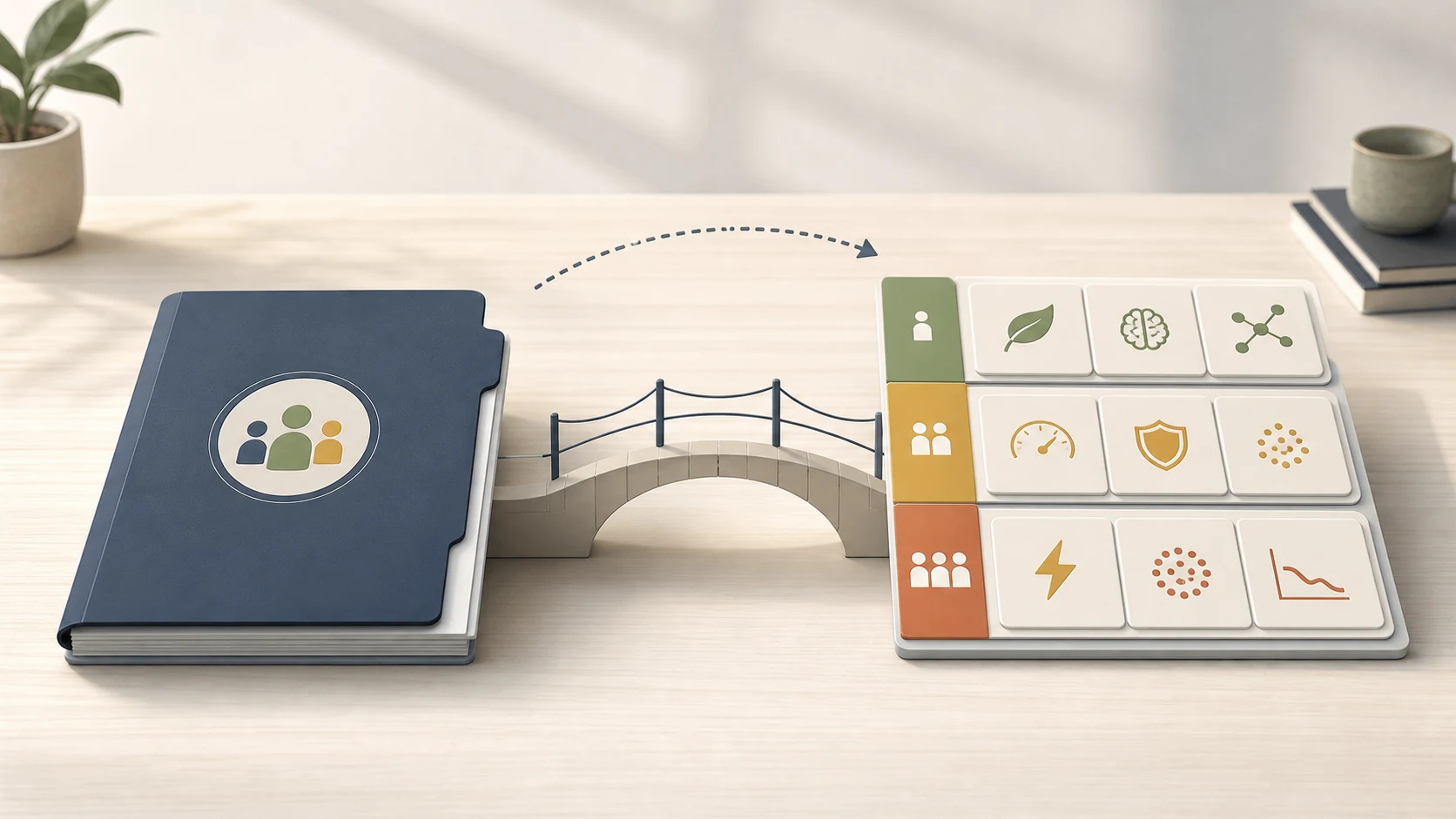
This matters for searchers because older and newer sources may appear to disagree. A webpage using ICD-10 may say "dissocial personality disorder." A newer ICD-11 discussion may say "personality disorder with prominent dissociality." A DSM-based source may say "antisocial personality disorder." The terms overlap, but they are not always used in the same formal way.
The shift also reflects a practical problem: personality patterns often overlap. A person may show dissocial traits and disinhibition, or dissocial traits plus strong emotional instability, or traits that vary in severity over time. ICD-11 tries to describe the person's overall personality functioning and prominent traits rather than forcing every person into one old category.
Is Dissocial Personality the Same as ASPD?
In many conversations, yes, dissocial personality disorder and antisocial personality disorder refer to very similar clinical territory. ICD-10 used "dissocial personality disorder"; DSM language uses "antisocial personality disorder." Both focus on long-term patterns involving disregard for others, repeated rule violations, irresponsibility, deceitfulness, impulsivity, aggression, or limited remorse.
Still, it is better to say "closely related" than "perfectly identical." Each classification system has its own wording, thresholds, and clinical context. DSM discussions often emphasize an adult pattern of disregard for and violation of others' rights, with evidence of conduct problems earlier in life. ICD-10 descriptions used the dissocial wording and listed features such as callous unconcern, irresponsibility, low frustration tolerance, and rationalizing conflict.
The popular word "sociopath" adds another layer. People often use it to describe ASPD-like traits, especially lack of empathy or manipulative behavior. But it is not a precise clinical term. For education and self-reflection, it can help to translate search language into careful wording: "What patterns am I noticing? Are they persistent? Are they causing harm? Is a qualified mental health professional needed?"
Dissocial Personality Symptoms and Behavioral Patterns
When people search for dissocial personality disorder symptoms, they often want a concrete list. A careful list should describe patterns, not verdicts about a person. Possible features include:
- Repeated disregard for rules, obligations, or the rights of others
- Deceitful or exploitative behavior used for gain, control, or avoidance of responsibility
- Impulsivity, poor planning, or repeated risk taking
- Irritability, aggression, or a low threshold for conflict
- Limited remorse after harming, using, or misleading others
- Difficulty sustaining responsible work, financial, family, or relationship behavior
- A tendency to blame others or offer polished explanations for harmful choices

These patterns can be serious, especially when violence, coercion, stalking, threats, exploitation, or substance misuse are present. They can also be misunderstood when people rely only on internet checklists. Depression, anxiety, trauma responses, ADHD, substance use, bipolar mood episodes, psychosis, brain injury, autism-related social differences, or another personality pattern can change how behavior looks from the outside.
That is why a short online article or an educational sociopath self-assessment should be treated as a reflection aid, not as a final answer. If behavior is frightening, abusive, or unsafe, prioritize immediate support, boundaries, and local emergency or crisis resources.
Dissocial Is Not Dissociative
One common search mistake is confusing dissocial personality with dissociative identity disorder, sometimes still called "multiple personality disorder" in older or informal language. These are different concepts.
Dissocial refers to antisocial or ASPD-like patterns involving social rules, others' rights, empathy, responsibility, and remorse. Dissociative refers to disruptions in memory, identity, awareness, perception, or a sense of self. Dissociative identity disorder is not a personality disorder. It belongs to the dissociative disorders group and is often discussed in relation to trauma, identity states, memory gaps, and changes in self-experience.
The spelling similarity is the trap. If the question is about "a dissociating person," memory gaps, feeling detached from reality, identity shifts, or losing time, that is a dissociation topic. If the question is about repeated exploitation, rule breaking, aggression, or lack of remorse, that is closer to the dissocial or ASPD topic.

What a Dissocial Personality Test Can and Cannot Tell You
Searches for "dissocial personality disorder test" usually come from uncertainty. Someone may wonder whether their own behavior is unusual, whether a partner is showing ASPD traits, or whether an old term in a record means the same thing as ASPD.
An online screening tool can help organize observations. It can ask about patterns related to impulsivity, empathy, remorse, deception, responsibility, and conflict. It can also make a difficult topic easier to approach privately. But it cannot replace a full clinical evaluation, and it cannot settle questions about risk, intent, criminal responsibility, trauma, or co-occurring conditions.
A balanced way to use a screener is:
- Notice which traits feel familiar and which do not.
- Look for patterns across time, not one isolated incident.
- Separate harm from labels: focus on what happened, what needs to stop, and what support is needed.
- Consider professional guidance if the pattern is persistent, impairing, frightening, or legally risky.
- Use results as conversation notes, not as proof about anyone's character.
This approach keeps the focus on safety, clarity, and next steps rather than shame or certainty.
Treatment, Management, and Hope Without Overselling
People also ask whether dissocial disorder is treatable. The most honest answer is nuanced. Evidence for treating core antisocial or dissocial personality patterns is limited, and engagement can be difficult. At the same time, professional care may still help with specific problems such as impulsivity, aggression, substance misuse, depression, anxiety, trauma symptoms, relationship instability, or legal and occupational consequences.
Guidance from clinical systems often emphasizes structured assessment, attention to risk, treatment of co-occurring conditions, and psychological interventions that address behavior patterns. For some people, group-based cognitive and behavioral approaches, therapeutic communities, substance use treatment, or long-term structured support may be part of care. Medication is usually discussed for co-occurring conditions rather than as a stand-alone answer for personality traits.
For family members, partners, or friends, "treatable" is not the only question. It is also fair to ask: Am I safe? Are there threats, coercion, stalking, financial exploitation, or escalating aggression? Do I need outside support? Can boundaries be maintained? A supportive tone should never require ignoring harm.
When to Seek Professional Support
Consider professional support when dissocial personality traits seem persistent, cause repeated harm, or create risk for violence, exploitation, substance misuse, legal trouble, self-harm, or serious relationship damage. A mental health professional can look at developmental history, current behavior, co-occurring conditions, risk, strengths, and treatment options in a way an online article cannot.
If you are reflecting on your own behavior, bring specific examples rather than trying to prove a label. If you are worried about someone else, focus on observable behavior and your safety. You can also use a confidential trait reflection tool to organize thoughts before deciding whether to seek more support. The goal is not to brand anyone as "bad." The goal is to understand patterns clearly enough to make safer, more grounded decisions.

FAQ
What is a dissocial disorder?
"Dissocial disorder" is usually a casual or shortened way people refer to dissocial personality disorder, the ICD-10 term closely related to antisocial personality disorder. It describes persistent patterns involving disregard for other people's rights, social rules, responsibility, and remorse. In ICD-11, the older type-based wording has shifted toward personality disorder severity plus trait domains such as dissociality.
What does dissocial mean?
Dissocial means seriously disconnected from expected social responsibility or concern for others. In this context, it does not mean shy, introverted, or simply unsocial. It points toward patterns such as callousness, exploitation, irresponsibility, aggression, or repeated disregard for norms and consequences.
Is dissocial personality disorder the same as antisocial personality disorder?
They are very closely related. Dissocial personality disorder is the ICD-10 wording, while antisocial personality disorder is the DSM wording. The concepts overlap strongly, but each system has its own formal criteria and clinical context.
How common is dissocial personality disorder?
Estimates vary by country, method, setting, and criteria. Some European general-population estimates reported roughly 1 to 1.3 percent in men and lower rates in women, while rates are much higher in some forensic or prison settings. Any estimate should be read with caution because classification systems and study methods differ.
Can people with ASPD have relationships or fall in love?
Some people with ASPD traits have friendships, romantic relationships, families, and attachments. The quality and safety of those relationships can vary widely. Traits such as deceitfulness, impulsivity, aggression, or low remorse may create serious harm, so it is better to look at consistent behavior, accountability, and safety rather than relying on a label alone.
Is it safe to date someone with ASPD traits?
Safety depends on behavior, not the label by itself. Threats, coercive control, stalking, intimidation, violence, repeated lying, financial exploitation, or pressure to ignore your boundaries are warning signs. If you feel unsafe, seek support from trusted people, local services, or emergency resources.
How is dissocial personality treated or managed?
Care usually focuses on structured assessment, risk management, co-occurring conditions, and behavior-focused psychological support. Treatment for substance misuse, depression, anxiety, trauma symptoms, or aggression may also matter. Evidence is mixed, so claims should stay realistic and professional guidance is important.
How is dissocial personality different from dissociation?
Dissocial relates to antisocial or ASPD-like patterns involving social rules, empathy, responsibility, and harm to others. Dissociation involves disruptions in memory, identity, awareness, or a sense of reality. Dissociative identity disorder is a dissociative disorder, not a personality disorder.