Early Signs of Sociopathy in Children: Tests & When to Seek Help
Every parent encounters moments of frustration when their child misbehaves. Whether it is a toddler throwing a tantrum or a teenager slamming a door, rebellion is often a normal part of growing up. However, for some parents, the behavior goes beyond typical defiance. You might find yourself asking: Is this just a phase, or is it something more serious?
Watching a child struggle with empathy or repeatedly break rules can be frightening. It is natural to worry about their future and how they will navigate the world. Recognizing the signs early is not about labeling a child. Instead, it is about finding the right support to help them develop healthier emotional patterns. If you are concerned about a loved one or your own patterns, you can take the test to gain initial insights into personality traits.
This article explores the early indicators of what is often referred to as childhood sociopathy—clinically known as Conduct Disorder. We will look at how to distinguish between normal growing pains and serious red flags. We also provide guidance on the next steps for your family.
Understanding Normal Childhood vs. Concerning Behaviors
It is important to remember that children are still learning how to regulate their emotions. Their brains are under construction. Specifically, the areas responsible for impulse control and empathy are still developing. To understand if a behavior is a "red flag," we must first look at what is expected during different stages of development.
Typical Developmental Stages and Rebellion Patterns
During the toddler years, "no" is a favorite word. This is a sign of developing independence, not a lack of morality. Similarly, during the teenage years, children often push boundaries to establish their own identities. This might include occasional rule-breaking, moodiness, or a desire for privacy.
Normal rebellion is usually situational. A child might be disrespectful after a long day at school or when they feel misunderstood. Usually, after the conflict, the child feels some level of guilt. They often attempt to repair the relationship. They still maintain a general respect for the safety and rights of others, even if they are being difficult.
How to Recognize Warning Signs in School-Aged Kids
The primary difference between typical rebellion and concerning behavior is the pattern. If a child’s aggression or defiance is persistent and pervasive, it may be time to look closer. This is especially true if it happens across all settings—home, school, and with friends.
Concerning behaviors often involve a lack of remorse. A typical child might feel bad after hurting a sibling. However, a child showing early signs of sociopathic traits might seem indifferent or even satisfied. If you notice a consistent disregard for the feelings of others, you might want to identify patterns by using a preliminary screening tool. This helps see how these traits align with recognized clinical standards.
Early ASPD Indicators in Children and Teens
In clinical psychology, "sociopathy" is not a formal diagnosis for children. Instead, professionals use the term Antisocial Personality Disorder (ASPD) for adults. For those under 18, the diagnostic focus is usually on Conduct Disorder (CD). Recognizing early ASPD indicators involves looking at how a child interacts with the world over a long period.
Official Diagnostic Guidelines for Childhood Conduct Disorders
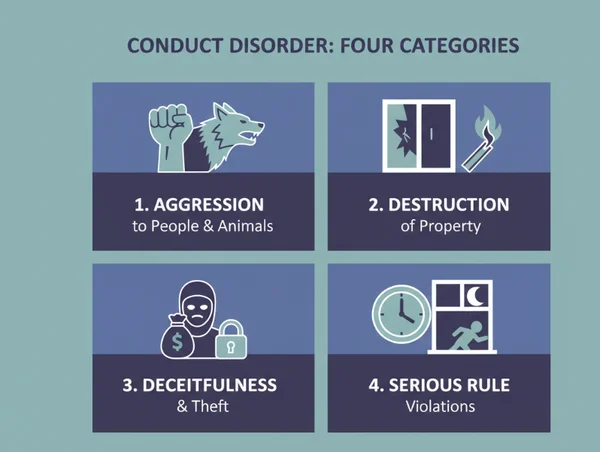
The DSM-5 (Diagnostic and Statistical Manual of Mental Disorders) provides specific criteria for Conduct Disorder. These behaviors are generally grouped into four main categories:
- Aggression to people and animals: This includes bullying, initiating physical fights, or being physically cruel to animals.
- Destruction of property: This involves deliberate fire-setting or destroying others' belongings.
- Deceitfulness or theft: This includes frequent lying to get what they want ("conning") or shoplifting.
- Serious violations of rules: This involves staying out late despite parental rules, running away from home, or frequent truancy from school.
To meet the criteria, these behaviors must cause significant impairment in social or academic functioning. It is not just one mistake. It is a consistent lifestyle of rule-breaking.
Behavioral Patterns to Watch For
Beyond the formal criteria, there are subtle behavioral patterns that caregivers should monitor. One major sign is "callous-unemotional traits." This refers to a child who does not seem to care about the consequences of their actions. They also appear indifferent to the pain they cause others.
They may be highly manipulative. For example, they might use "crocodile tears" to get out of trouble, only to return to the behavior immediately. They might also show a high level of risk-taking behavior without any fear of physical or social punishment. To better understand these complex personality structures, many parents check symptoms through online resources to prepare for professional consultations.
Emotional and Social Developmental Delays
Children with these indicators often struggle with emotional intelligence. They might have difficulty recognizing fear or sadness in others' faces. This is not necessarily a lack of intelligence. Many children with these traits are highly intelligent and charming. However, their social development is lopsided.
These children often grasp ‘cognitive empathy’—understanding others’ thoughts. But they struggle with ‘affective empathy,’ the ability to feel others’ emotions. This disconnect lets them manipulate social situations while staying emotionally detached.
Differentiating Conduct Disorder from Other Conditions
It is vital to avoid jumping to conclusions. Many mental health conditions share symptoms with Conduct Disorder. Mislabeling a child can lead to the wrong treatment.
ADHD vs. Conduct Disorder: Key Differences
Attention-Deficit/Hyperactivity Disorder (ADHD) is often confused with Conduct Disorder because both involve impulsivity. However, the motivation is different. A child with ADHD might break a rule because they didn't think before acting. They usually feel bad afterward.
Unlike ADHD—where rule-breaking stems from impulsivity—Conduct Disorder involves deliberate defiance. These children break rules to gain power, status, or possessions. While ADHD is a problem of "can't," Conduct Disorder is often seen as a problem of "won't." Many children have both, which makes using an ASPD screening tool and seeking professional help even more critical.
Trauma Responses and Behavioral Issues
Children who have experienced trauma or neglect may display "survival-based" behaviors. These can look like sociopathy to an untrained eye. A child who has been hurt may become aggressive to protect themselves. They might lie because they grew up in an environment where the truth was dangerous.
Trauma often triggers hyper-vigilance or emotional numbing. While these may resemble sociopathic traits, they’re actually survival mechanisms. Professionals must carefully evaluate a child's history to determine if the behavior is a personality trait or a reaction to a difficult environment.
When and How to Seek Professional Help
If you have read the signs above and feel a sense of recognition, the most important thing to do is act. Early intervention is the most effective way to change the trajectory of a child’s life. You can start your test today to reflect on the behaviors you are seeing and organize your thoughts before speaking to a doctor.
Creating Documentation of Concerning Behaviors
When you meet with a professional, they will need specific examples. Start keeping a log of behaviors that worry you. Instead of writing "he was mean," be specific. Write: "he hit his sister without provocation and did not apologize when she cried."
Include the date, the trigger, the behavior, and the child’s reaction. This documentation helps a psychologist see patterns that might not be obvious during a single office visit. It provides a clear map of the frequency and intensity of the issues.

Finding the Right Professional Support
The first step is usually a pediatrician, but you should eventually seek a specialist. Child psychologists or psychiatrists who specialize in behavioral disorders are best equipped to handle these cases. Before your appointment, you may want to access our parent resource guide to better understand the diagnostic process.
Look for providers who offer Evidence-Based Treatments (EBT). These include Parent-Child Interaction Therapy (PCIT) or Multisystemic Therapy (MST). These therapies do not just focus on the child; they help the whole family. They teach parents how to set firm, consistent boundaries and how to reward positive social behavior effectively.
The Role of School and Community Resources
Do not try to handle this alone. Schools have resources, such as Individualized Education Programs (IEPs), that can provide a child with extra social-emotional support. School counselors can be an extra set of eyes to monitor how the child interacts with peers.
Community mental health centers also offer programs for "at-risk" youth. These programs provide a safe environment for children to practice social skills. They also allow parents to find support among others who are facing similar challenges.
Navigating Your Next Steps
Navigating childhood behavioral concerns can feel overwhelming, but you’re not alone. If these signs resonate with your experiences, our confidential sociopath test offers a judgment-free space to reflect—and a pathway to tailored support.
By understanding the difference between typical rebellion and deep-seated behavioral patterns, you can advocate for the help your child needs. Early intervention can make a world of difference. Take that first step toward clarity and support today.
FAQ Section
Can therapy really help my child? Here’s what decades of research show…
Yes, research indicates that early intervention is highly effective. It helps the child develop better coping mechanisms and social skills before negative behaviors become deeply ingrained habits. Therapy for the family also helps improve the home environment and reduces the stress on caregivers.
Can a child under 10 be diagnosed with conduct disorder?
Yes. A child can be diagnosed with "Childhood-Onset" Conduct Disorder if symptoms appear before age 10. This subtype is often associated with more persistent behavior into adulthood. This makes early recognition and professional therapy extremely important.
What's the difference between normal teen rebellion and conduct disorder?
Normal teen rebellion usually focuses on minor issues like clothing, music, or curfews. It is often triggered by a desire for independence. Conduct Disorder involves more severe, harmful actions. This includes physical violence, theft, or deliberate destruction of property. To help clarify your concerns, you can use our tool to see how specific behaviors align with recognized traits.
What resources are available for parents concerned about their child's behavior?
Parents can access local mental health clinics, school support services, and national organizations like the American Academy of Child and Adolescent Psychiatry (AACAP). Many find it helpful to use a confidential ASPD screening tool as a preliminary way to gather information before seeking out these professional resources.
Is it possible for children to outgrow conduct disorder traits?
Many children do improve with the right support. While some may continue to have personality challenges, many learn to manage their impulses and function successfully in society. The key is consistent treatment and a supportive, structured environment.