Mixed Personality Disorder Symptoms, Examples, ICD-10, and DSM-5 Meaning
Mixed personality disorder is a phrase people often search when their patterns do not seem to fit one neat label. Someone may notice unstable relationships, rejection sensitivity, distrust, emotional swings, rigid control, or impulsive choices, yet no single personality disorder description explains the whole picture. The term can also be confusing because it sounds like "multiple personalities," which is a different idea entirely. This guide explains what mixed personality disorder usually means, how clinicians may think about mixed traits, and why an online article or a private personality-trait learning tool can support reflection without replacing a qualified mental health evaluation.

What Mixed Personality Disorder Means
Mixed personality disorder usually refers to a pattern in which a person shows traits associated with more than one personality disorder. The key idea is not that someone has several separate selves. It is that long-term patterns of thinking, emotion, relating, and impulse control may overlap across categories.
Personality disorders are not just occasional bad moods, awkward social moments, or conflict during stress. They involve persistent patterns that tend to be inflexible, show up across settings, and create distress or impairment in relationships, work, school, family life, or self-care. A mixed presentation can be especially hard to understand because the traits may seem to point in different directions.
For example, a person might crave closeness but also expect rejection. Another person may appear confident and controlling at work, yet feel intensely threatened by criticism. Someone else may avoid emotional intimacy while becoming impulsive under stress. These mixtures are why a careful clinical assessment looks at history, context, functioning, safety, substance use, trauma, mood symptoms, and medical factors rather than one checklist.
Common Mixed Personality Disorder Symptoms and Traits
There is no single symptom list that fits everyone with mixed personality disorder traits. The signs depend on which patterns are present, how intense they are, and how much they interfere with daily life. Still, several themes often bring people to search for this topic.
Common mixed personality disorder signs can include:
- Emotional shifts that feel bigger, faster, or harder to settle than the situation seems to explain.
- Unstable or painful relationships, including cycles of closeness, conflict, withdrawal, apology, and repeat tension.
- Strong sensitivity to rejection, criticism, abandonment, shame, or perceived disrespect.
- Suspicion, guardedness, or difficulty trusting others even when evidence is unclear.
- Impulsive behavior around spending, substances, sex, anger, driving, or sudden decisions.
- A rigid need for control, perfection, reassurance, approval, or distance.
- Difficulty understanding how one's behavior affects other people.
- A pattern of blaming others, feeling misunderstood, or feeling trapped by relationships.
These signs do not prove that a person has a personality disorder. Many can also appear with anxiety, depression, trauma responses, ADHD, substance use, grief, relationship stress, sleep problems, or medical issues. The difference is usually the duration, rigidity, and effect on functioning.
A useful self-check is to ask: "Does this pattern keep repeating across different relationships or settings, even when I try to change it?" If the answer is yes, that is a stronger reason to seek a professional perspective.

Examples of Mixed Personality Disorder Patterns
Examples can make the idea clearer, as long as they are treated as illustrations rather than labels for real people.
One mixed pattern might combine avoidant and dependent traits. A person may fear criticism and avoid new relationships, yet also feel unable to make decisions without reassurance from a trusted person. The outside behavior can look like withdrawal, but underneath it may include both fear of rejection and fear of being left alone.
Another pattern might combine borderline, narcissistic, or antisocial traits. Searchers sometimes type phrases such as BPD, NPD, mixed personality disorder, rejection sensitivity, or recovery time because they see emotional intensity, shame, anger, entitlement, or a low-empathy reaction in the same relationship. A safer way to frame this is: several trait patterns can overlap, and the exact mix matters less than the harms, triggers, and changeable behaviors.
A third pattern might combine paranoid and schizoid traits. The person may keep emotional distance, prefer solitude, and interpret others as threatening or intrusive. This can make support difficult because the person may want relief but mistrust the process of getting help.
A fourth pattern might include obsessive-compulsive personality traits with avoidant traits. The person may set very high standards, feel anxious about mistakes, and avoid tasks or relationships where imperfection could be visible. This can be mistaken for laziness, arrogance, or simple shyness, when the pattern is more complicated.
The practical point is not to collect labels. It is to identify repeatable patterns: what triggers distress, what behavior follows, what consequences happen, and what skills or support might reduce harm.
DSM-5, ICD-10 F61, and the Name Question
Searches for "mixed personality disorder DSM 5" and "ICD-10 mixed personality disorder" often come from the same confusion: different classification systems have used different ways to describe overlapping personality traits.
In ICD-10, F61 refers to mixed and other personality disorders. In plain English, this category is used when personality-disorder features are present but do not form one clear pattern that fits a specific F60 category. Some sources describe F61.0 as mixed personality disorders, meaning features of several specific personality disorders without one predominant set.
In DSM-5 and DSM-5-TR, "mixed personality disorder" is not usually presented as one of the ten named personality disorders. Instead, clinicians may use categories such as other specified personality disorder or unspecified personality disorder when a person's difficulties are clinically meaningful but do not fit one named pattern cleanly. DSM-5 also includes an alternative trait-based model for further study, which focuses more on impairments in self and interpersonal functioning plus pathological trait domains.
ICD-11 moved even more strongly toward a dimensional approach. Instead of relying mainly on many named types, it emphasizes severity and trait qualifiers. That shift reflects a real clinical problem: personality traits often overlap, and a person may not fit one box.
So, is mixed personality disorder real? The short answer is that mixed personality pathology is a real clinical issue, but the exact name depends on the classification system, country, professional setting, and clinician's formulation.
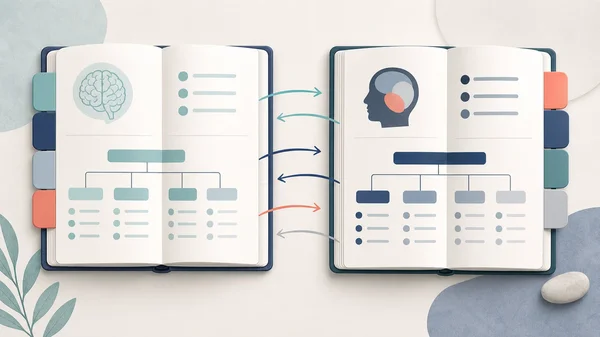
What a Mixed Personality Disorder Test Can and Cannot Tell You
People often search for a mixed personality disorder test because they want a clear answer. That wish makes sense. When patterns are painful or confusing, a structured questionnaire can feel less overwhelming than guessing.
An online screening tool can help you organize observations. It may prompt questions about empathy, impulsivity, anger, distrust, remorse, boundaries, emotional control, or relationship patterns. It can also help you notice whether a concern is mainly about ASPD-related traits, Cluster B traits, avoidance, anxiety, or broader personality functioning. For example, an educational ASPD and personality-trait screener can be a starting point for reflection when used with realistic expectations.
What a test cannot do is determine your full clinical picture. It cannot know your developmental history, trauma exposure, medication effects, substance use, sleep, cultural context, family dynamics, safety risks, or the difference between a stable trait and a temporary stress response. It also cannot fairly label someone else based only on your description of them.
Use test results as notes, not a verdict. Helpful next steps include writing down examples, noticing triggers, tracking impact over time, and discussing patterns with a licensed mental health professional if they cause distress, risk, or impairment.

Treatment and Support Options
Mixed personality disorder treatment is usually tailored to the traits, symptoms, and life problems that are most active. There is no one-size-fits-all plan because two people with the same broad label may need very different support.
Psychotherapy is often central. Cognitive behavioral therapy may help with thought patterns and behavior loops. Dialectical behavior therapy can be useful when emotional regulation, impulsivity, self-harm risk, or relationship intensity are major concerns. Psychodynamic or schema-focused approaches may explore long-standing relationship patterns, shame, mistrust, abandonment fears, or rigid self-protection strategies. Group therapy or psychoeducation can sometimes help people practice interpersonal skills in a supported setting.
Medication does not usually change personality traits directly, but a prescriber may consider medication for related depression, anxiety, sleep problems, mood instability, aggression, or other co-occurring conditions. Any medication decision should be individualized and monitored by a qualified professional.
Support also includes practical changes. A person may benefit from reducing substance use, improving sleep, building routines, learning conflict time-outs, setting safer boundaries, and creating a plan for crisis moments. If there is risk of self-harm, violence, abuse, stalking, coercion, or immediate danger, urgent help from local emergency services or a crisis support service is more appropriate than an online article.

How to Use Mixed Personality Disorder Information Safely
Mixed personality disorder information is most useful when it leads to better observation, kinder boundaries, and more specific support. It is least useful when it becomes a weapon against yourself or someone else.
Try this simple reflection process:
- Name the pattern in behavior terms. For example: "I withdraw for days after criticism" is more useful than "I am broken."
- Identify the setting. Does it happen at work, in romantic relationships, with family, online, or everywhere?
- Track the trigger and consequence. What happened first, what did you do next, and what did it cost?
- Separate traits from choices. A trait may explain why something is hard; it does not remove responsibility for repair.
- Bring notes to a professional if the pattern is persistent, risky, or impairing.
If your concern is ASPD-related traits such as deceitfulness, disregard for others, low remorse, or repeated rule-breaking, a structured self-reflection resource may help you prepare clearer questions. Keep the goal modest: better language, better next steps, and less confusion.
The safest takeaway is this: mixed traits are complex, but complexity is not hopeless. Patterns can be understood, skills can be learned, and professional support can help translate labels into a plan.
FAQ
What does it mean when someone has mixed personalities?
In everyday speech, "mixed personalities" often means someone seems inconsistent, unpredictable, or different in different situations. In mental health language, mixed personality disorder usually means overlapping personality-disorder traits, not separate identities or "multiple personalities." It is about mixed patterns of emotion, relating, self-image, trust, control, and impulse regulation.
Is mixed personality disorder real?
Mixed personality traits are real and clinically important, but the exact name varies. ICD-10 includes F61 for mixed and other personality disorders. DSM-5 does not list "mixed personality disorder" as one of the ten main named personality disorders, but it gives clinicians ways to describe presentations that do not fit one category cleanly.
What is ICD-10 F61 mixed and other personality disorders?
ICD-10 F61 is a category for mixed and other personality disorders. It is generally used when a person has features from several specific personality disorders, but no single pattern is dominant enough to explain the whole presentation. Coding and interpretation should be handled by qualified professionals in the relevant healthcare system.
Is mixed personality disorder in DSM-5?
Not as a main named disorder like borderline, antisocial, narcissistic, avoidant, or obsessive-compulsive personality disorder. In DSM-5 and DSM-5-TR, mixed presentations may be described through other specified personality disorder, unspecified personality disorder, or trait-based formulations depending on the clinical context.
What is the difference between SAD and AVPD?
SAD usually means social anxiety disorder, while AVPD means avoidant personality disorder. Social anxiety disorder focuses on fear of social judgment or embarrassment. Avoidant personality disorder is a broader, long-term pattern of social inhibition, feelings of inadequacy, and sensitivity to rejection. They can overlap, so a professional evaluation may be needed when the distinction affects care.
What do Cluster B personalities have in common?
Cluster B is a DSM grouping that includes antisocial, borderline, histrionic, and narcissistic personality disorders. They are often associated with dramatic, emotional, impulsive, or conflict-heavy patterns, but the conditions are not the same. The cluster label is a rough organizing tool, not a complete explanation of someone's behavior.
Can mixed personality disorder be a disability?
It can be disabling for some people if symptoms seriously limit work, relationships, self-care, or daily functioning. In disability systems, approval usually depends on documented impairment and legal criteria, not just the label. A clinician, benefits adviser, or legal professional can explain what evidence is relevant in a specific location.
Should I use Reddit to understand mixed personality disorder?
Reddit can show how people describe lived experiences, but it is not a reliable way to identify your own condition or someone else's. Anonymous stories may be incomplete, extreme, or inaccurate. Use forums for perspective only, and rely on qualified mental health professionals for assessment and care planning.