Sociopath Characters: A Psychology-Informed Guide to Fictional Traits
Sociopath characters stay with us because they turn personality into plot. They can be charming, frightening, funny, strategic, impulsive, or strangely calm under pressure. Searchers usually want more than a list of names: they want to know which fictional characters seem sociopathic, what traits make them read that way, and where the line sits between storytelling and real mental health language. For a reality-focused starting point, SociopathTest.org offers a free sociopath self-screening tool for private reflection, but fictional analysis should stay separate from personal labels. A character can display sociopathic traits on the page or screen without representing Antisocial Personality Disorder accurately.

What Makes Sociopath Characters So Memorable?
The strongest sociopath characters are not memorable simply because they break rules. Fiction already has plenty of rule-breakers, rebels, criminals, and antiheroes. What makes a character feel sociopathic is the combination of social fluency and emotional disconnection: the character understands what other people want, but does not seem moved by their pain.
That tension creates drama. A warm smile can hide calculation. A generous gesture can become a trap. A calm voice can make an extreme act feel more disturbing because the character appears emotionally untouched by it.
Pop culture often uses the word "sociopath" loosely. In clinical language, the closest formal concept is Antisocial Personality Disorder, or ASPD, which involves a persistent pattern of disregard for the rights and safety of others. Fiction may borrow pieces of that pattern, but it also exaggerates traits for suspense, comedy, satire, or horror. That is why a careful guide should talk about traits, not treat character labels as clinical facts.
Trait Patterns Fiction Uses Again and Again
Most famous sociopath characters are built from a few recurring signals. The exact mix changes by genre, but these traits appear across movies, books, shows, anime, and cartoons.
Charm That Works Like a Tool
Many sociopathic characters know how to mirror people. They flatter, study, seduce, entertain, or present the version of themselves most likely to get access. Tom Ripley is often discussed in this lane because his social performance changes depending on the room. Amy Dunne is another familiar example because her narration, image management, and planning make the audience question how much of her warmth is strategy.
In real life, charm alone is not enough to identify a pattern. Many empathetic people are socially skilled. In fiction, though, charm becomes suspicious when it repeatedly leads to manipulation, exploitation, or a lack of concern for harm.
Low Remorse After Harm
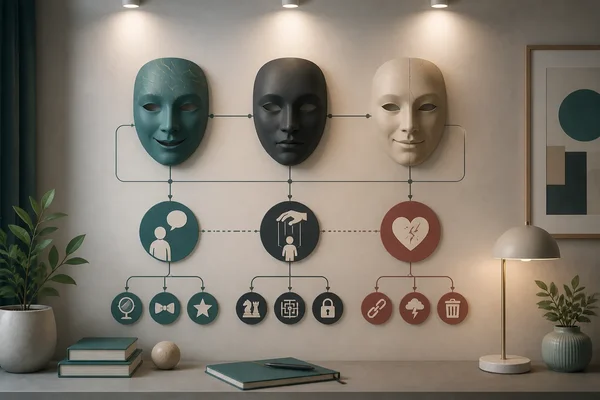
The trait that usually separates sociopathic characters from ordinary selfish characters is low remorse. They may regret getting caught, losing control, or choosing an inefficient plan, but they do not appear deeply troubled by another person's suffering. The educational sociopath test overview frames these traits as reflection points, which is a safer lens than turning a character list into a checklist for labeling people.
Rule-Breaking With a Personal Logic
Sociopath characters often operate by a private code. Some are chaotic and impulsive; others are precise and controlled. Patrick Bateman, Hannibal Lecter, Anton Chigurh, Joe Goldberg, Light Yagami, and Johan Liebert are often grouped in online discussions because each character seems to place personal logic above ordinary empathy. Their rules may be aesthetic, ideological, self-protective, or power-driven.
The important point is pattern. One cruel action does not make a character sociopathic. A repeated pattern of deception, disregard, exploitation, and shallow remorse is what creates the impression.
Sociopath Characters in Movies, TV, Anime, and Cartoons
Search interest around sociopath characters in movies and TV usually clusters around charismatic antagonists. Viewers are drawn to characters who can control a room, hide their intentions, or make the audience complicit by being entertaining. Hannibal Lecter is a classic high-functioning example in the popular imagination: refined, intelligent, observant, and frighteningly calm. Patrick Bateman works differently because his polished routine exposes emptiness and status obsession. The Joker is usually less "high-functioning" and more theatrical, but he is frequently discussed because of his lack of remorse, thrill seeking, and disregard for ordinary social bonds.
TV adds another layer because long-form storytelling can show masks cracking over time. Joe Goldberg from You, Villanelle from Killing Eve, and Tony Soprano from The Sopranos are often debated because they mix tenderness, violence, self-justification, and selective attachment. That mixture is exactly why fictional labels are messy. A character can be manipulative or violent without fitting a clean psychological category.
Anime sociopath characters are often discussed through characters such as Light Yagami from Death Note, Johan Liebert from Monster, and Griffith from Berserk. These characters are compelling because they combine intelligence with moral detachment. Light frames harm as justice, Johan turns emptiness into influence, and Griffith's ambition raises questions about sacrifice, loyalty, and self-worship. In anime, style and symbolism can intensify traits that would be subtler in realistic drama.
Cartoons use sociopathic traits for a different effect. Eric Cartman from South Park is frequently mentioned because his selfishness, cruelty, manipulation, and lack of remorse are exaggerated for satire. Some viewers jokingly ask whether the Seinfeld characters are sociopaths because the comedy depends on selfishness and low accountability. But comedic self-absorption is not the same as a sustained ASPD-like pattern. A sitcom character may be morally terrible for laughs without being a serious portrayal of sociopathy.
Psychopath Characters vs Sociopathic Characters in Fiction
People often search for psychopath characters and sociopath characters as if the labels are interchangeable. In everyday pop culture, they usually are. A movie list may call the same character a psychopath, sociopath, narcissist, monster, villain, or antihero depending on the writer's angle.
For an educational article, it helps to separate three ideas. "Sociopath" is a common, nontechnical word. "Psychopath" is also not a standard everyday clinical label, though it appears in research and forensic discussion. ASPD is the formal disorder category most closely related to the pattern people usually mean.
Fiction blurs these terms because it is trying to create emotional impact, not clinical precision. A character may be called a high-functioning sociopath because they are intelligent, socially smooth, and successful in public. Another may be called a psychopath because they appear cold, predatory, or violent. Those descriptions tell us how audiences experience the character, but they do not prove that the story is an accurate mental health portrait.
This distinction matters because many real people with mental health struggles are not violent or manipulative in the sensational way fiction suggests. Good media analysis can be curious without adding stigma.
How to Write a Sociopathic Character Without Flattening Them
Writers searching for how to write a sociopath character often start with traits, but traits alone can create a cardboard villain. A stronger approach is to decide what function the trait serves in the story.
Use this quick writing checklist:
- What does the character want strongly enough to override other people's boundaries?
- Which social mask helps them get it?
- When do they show charm, and when does the charm disappear?
- Do they lack remorse, redirect blame, or only regret consequences?
- What pattern repeats across relationships, work, family, or power?
- What would make the audience understand the character without excusing harm?

The best sociopathic characters usually have a recognizable inner logic. They are not random collections of red flags. Amy Dunne's control, Tom Ripley's envy, Light Yagami's grandiosity, and Villanelle's appetite for stimulation each create a different kind of danger. That specificity is why they feel memorable.
Writers should also avoid making every harmful trait mean the same thing. A narcissistic character may crave admiration. A Machiavellian character may manipulate for strategic gain. A character with trauma may be guarded or reactive without lacking empathy. A sociopathic character, in the fictional sense, is usually defined by a persistent disregard for others when that disregard serves their goal.
Using Fictional Characters for Reflection Without Labeling People
Fiction can give us language for patterns, but it should not become a shortcut for labeling ourselves, friends, partners, coworkers, or children. If a character reminds you of a real situation, pause on the behavior instead of the label. Are there repeated lies? Boundary violations? Intimidation? Lack of accountability? Those questions are more useful than deciding whether someone is "a sociopath."
If your interest in sociopath characters connects to concerns about your own behavior or someone close to you, consider using a private sociopath trait screener as one reflective step, not as a final answer. For serious distress, safety concerns, repeated aggression, or relationship harm, a qualified mental health professional can provide context that an article or online screener cannot.
The healthiest way to read sociopath characters is as a blend of media literacy and psychology-informed caution. Enjoy the story. Notice the trait patterns. Keep the humanity of real people separate from the heightened drama of fiction.
FAQ
Which characters are sociopaths?
Characters often discussed as sociopathic include Tom Ripley, Amy Dunne, Patrick Bateman, Hannibal Lecter, The Joker, Light Yagami, Johan Liebert, Villanelle, Joe Goldberg, and Eric Cartman. These are interpretive pop-culture labels unless the fictional work explicitly frames the character that way.
What are some famous sociopath characters?
Famous examples often come from thrillers and dark dramas: Tom Ripley from The Talented Mr. Ripley, Amy Dunne from Gone Girl, Patrick Bateman from American Psycho, Hannibal Lecter from The Silence of the Lambs, and Light Yagami from Death Note. Their appeal comes from intelligence, deception, charm, and low remorse.
What are the characteristics of a sociopathic person?
Educational descriptions of ASPD-related traits often include repeated disregard for others' rights, deceitfulness, impulsivity, irresponsibility, aggression or recklessness, and limited remorse. In fiction, writers usually exaggerate some of these traits for tension, comedy, horror, or satire.
Is Batman a sociopath?
Batman is usually not a strong sociopath example. He is secretive, obsessive, and sometimes emotionally distant, but he also shows empathy, guilt, loyalty, grief, and a consistent rule against killing in many versions. Those traits make him closer to a traumatized vigilante archetype than a sociopathic character.
Are sociopath characters always villains?
No. Many are villains, but some are antiheroes, unreliable narrators, comic characters, or morally gray protagonists. The key question is not whether the character is "bad," but whether they show a repeated pattern of manipulation, disregard for others, and low remorse.
Are the Seinfeld characters sociopaths?
Usually, that claim is a joke about sitcom selfishness. The Seinfeld characters often act vain, petty, dishonest, and inconsiderate, but the show exaggerates everyday social failure for comedy. That does not make them careful portrayals of sociopathy.