Sociopath Myths: DSM-5 Facts & Test Insights
Introduction: Beyond the Screen: Unpacking Sociopath Myths & Realities
Hollywood loves a good villain. We see them in movies and on TV: the charming but ruthless CEO, the cold-hearted criminal, the master manipulator. These characters are often labeled "sociopaths," painting a dramatic and terrifying picture. But how much of that popular image is based on scientific fact, and how much is pure fiction?
It's easy for the line between myth and reality to blur, leading to confusion and stigma. If you're trying to understand complex behaviors in yourself or others, separating clinical facts from cinematic fiction is the first step toward genuine insight. An online sociopath test can be a private starting point, but understanding the context is key.
This article debunks the most common sociopath myths using facts from the official diagnostic manual, the DSM-5. We'll explore what science says about Antisocial Personality Disorder (ASPD), the clinical term often linked to sociopathy. If you're looking to move beyond stereotypes and gain personal insights, this guide will give you the clarity you need.
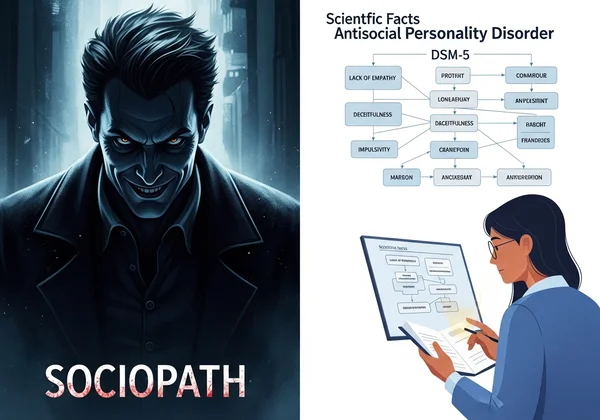
Sociopath Myths Debunked: Separating Fact from Fiction
Many widely held beliefs about sociopathy are just plain wrong. These misconceptions cause fear and get in the way of understanding the actual behaviors and traits involved. Let's separate the facts from the fiction.
Myth: All Sociopaths Are Violent Criminals
One of the most pervasive myths is that every person with sociopathic traits is a dangerous, violent criminal. While the clinical criteria for Antisocial Personality Disorder (ASPD) include a "disregard for and violation of the rights of others," this doesn't always mean physical violence.
This disregard shows up in many ways. It includes persistent lying and manipulation for gain. You might see reckless spending or skipping responsibilities. Many individuals with these traits never commit a violent crime. Instead, their destructive behavior is often emotional and psychological, damaging relationships and careers without ever breaking the law violently.
Myth: Sociopaths Cannot Feel Any Emotions
Another common misconception is that people with sociopathic traits are emotionless robots. That isn't entirely accurate. They do experience emotions, but it's often in a shallow way that’s different from most people.
They may feel irritation, anger, and frustration, especially when they don't get what they want. However, they typically lack deeper emotions like empathy, guilt, or genuine remorse. They can often mimic emotions to manipulate situations, but they don't feel the weight of their actions or the pain they cause.
Myth: Sociopathy is a Rare, Easily Identifiable Condition
Thanks to media portrayals, many people think they could easily "spot" a sociopath. In reality, the traits linked to ASPD exist on a spectrum, and many individuals who have them are great at blending in. They can be charismatic, charming, and seem perfectly normal on the surface.
These traits aren't as rare as people think, either. While full-blown ASPD is diagnosed in a small percentage of the population, many more people display some antisocial traits. This subtlety is why a confidential sociopath test or professional assessment is far more reliable than a gut feeling.
Myth: Once a Sociopath, Always a Sociopath – No Hope for Change
The belief that there's no hope for change is both pessimistic and overly simplistic. It's true that Antisocial Personality Disorder is a chronic and challenging condition to treat, as individuals often don't believe they have a problem. However, that doesn't mean change is impossible.
Long-term, consistent therapy can sometimes help individuals manage their most destructive behaviors, especially if they're motivated for a specific reason (like saving a relationship). While it's not a "cure," treatment can lead to better impulse control and fewer harmful actions.
The DSM-5 & Sociopathy: Understanding Antisocial Personality Disorder (ASPD)
To get to the truth, we have to turn to the source mental health professionals use: the Diagnostic and Statistical Manual of Mental Disorders, 5th Edition (DSM-5). The DSM-5 doesn't use the term "sociopath." Instead, it gives clear criteria for a formal diagnosis of Antisocial Personality Disorder (ASPD).
Key Diagnostic Criteria for ASPD from DSM-5
Only qualified professionals diagnose ASPD. It requires a pattern of behavior starting in your teens or early 20s. According to the DSM-5, this pattern includes at least three of the following:
-
Failure to conform to social norms and lawful behaviors.
-
Deceitfulness, such as repeated lying or conning others for profit or pleasure.
-
Impulsivity or failure to plan ahead.
-
Irritability and aggressiveness, often leading to physical fights.
-
Reckless disregard for the safety of self or others.
-
Consistent irresponsibility, such as failing to sustain work or honor financial obligations.
-
Lack of remorse, being indifferent to or rationalizing having hurt or mistreated others.
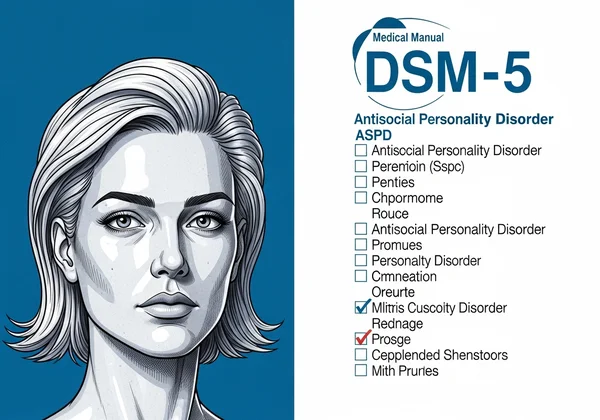
It's important to remember that only a licensed professional can make a diagnosis. Still, understanding these criteria helps you recognize patterns that might need a closer look.
How Sociopathy Differs from Psychopathy
"Sociopath" and "psychopath" are often used interchangeably, but they aren't the same. Neither is an official DSM-5 diagnosis, but they're useful concepts for describing different kinds of antisocial behavior.
- Sociopathy often stems from environment – like a tough upbringing. These folks tend to be erratic and impulsive, with bursts of anger. They might form attachments to a few people but still disregard society's rules.
- Psychopathy is thought to be more rooted in genetics. These individuals can be cold, calculating, and charming. They are often masters of manipulation who mimic emotions flawlessly to blend in.
Both of these concepts fall under the broad umbrella of Antisocial Personality Disorder.
The Spectrum of Antisocial Traits
It's crucial to understand that antisocial traits exist on a spectrum. A person might show some manipulative or impulsive behaviors without having a full-blown personality disorder. Stress and life experiences can influence behavior, too.
Recognizing where someone might fall on this spectrum is a valuable tool for self-awareness. It’s not about labels. It’s about understanding patterns. A confidential sociopath test can be a helpful starting point to explore these traits in a private, non-judgmental way.
Gaining Personal Insights: Your Sociopath Test Results Explained
After moving past the myths, you may wonder what a sociopath test can tell you from a personal, realistic perspective. This is where self-assessment tools, when used responsibly, can offer valuable preliminary insights.
Debunking the "High-Functioning Sociopath" Idea
You've probably heard the term "high-functioning sociopath" to describe a successful person who lacks empathy and manipulates others. Like "sociopath," this is a pop-culture term, not a clinical diagnosis.
It usually refers to someone who displays key ASPD traits—like no remorse and a habit of lying—but manages to hold down a job and maintain a respectable public image. They're often smart and charming, using these qualities to hide their disregard for others. This shows that antisocial traits don't always lead to a life of obvious chaos.
How Our Online Sociopath Test Provides Preliminary Insights
An online sociopath test can be a useful first step for self-exploration. Our free sociopath test is designed as a confidential screening tool. It's based on the concepts in the DSM-5 to help you identify patterns of behavior and thought linked to antisocial traits.
The process is simple: you answer a series of questions and get an instant summary. The results from our sociopath test are not a diagnosis. Instead, they're a private resource to help you reflect on your own tendencies or better understand someone you know. Think of it as a mirror for reflection, not a medical verdict. You can start your self-reflection anytime.

Moving Beyond Misconceptions with Self-Reflection
The goal here is to move past the scary, one-dimensional myths and toward a more nuanced understanding. Whether you're curious about yourself or worried about someone else, self-reflection is a powerful tool.
The results from a preliminary sociopath test can provide a framework for that reflection. They can help you organize your thoughts and decide if speaking with a mental health professional is a good next step. It's about empowering yourself with information, free from fear and stigma.
Navigating the Realities of Antisocial Personality Traits
Understanding sociopathy means looking past the screen villains and seeing the complex reality defined by psychology. We've learned that ASPD isn't always about violence, that emotions are shallow rather than absent, and that these traits exist on a spectrum.
Armed with these facts, fear gives way to real understanding – and that's where change starts. By understanding the real DSM-5 criteria and debunking harmful myths, you can approach this sensitive topic with clarity.
Curious how this applies to you? Try our free sociopath test now for your private insights – no strings attached.
Frequently Asked Questions About Sociopathic Traits
What are the primary signs a sociopath test looks for?
The primary signs, based on the DSM-5 criteria for ASPD, include a persistent pattern of disregarding others' rights. Key indicators a sociopath test screens for are deceitfulness, impulsivity, irritability, a lack of remorse for hurting others, and consistent irresponsibility with work or money.
What is the difference between a sociopath and a psychopath?
While both fall under the ASPD umbrella, the terms often describe different patterns. "Sociopaths" are typically seen as more impulsive and shaped by their environment. "Psychopaths" are often described as colder, more calculating, charming, and possibly having a stronger genetic link to their traits.
Can sociopathic traits be managed or "cured"?
There is no known "cure" for Antisocial Personality Disorder, as it's a deeply ingrained personality pattern. However, with long-term, specialized therapy, some individuals can learn to manage destructive behaviors. Motivation is a key factor in any treatment's success. To better understand these traits, you can take our confidential sociopath test.
Are "high-functioning sociopaths" a real clinical concept?
No, "high-functioning sociopath" isn't an official clinical diagnosis. It's a popular term for someone who exhibits significant antisocial traits (like manipulation and lack of empathy) but successfully maintains a career and social status, often by hiding their true nature behind a mask of charm.