What Is an Antisocial Person? Meaning, Behavior, and ASPD Boundaries
If you searched "what is an antisocial," you may be asking two different things at once. In everyday conversation, people often use antisocial to mean quiet, introverted, or uninterested in parties. In psychology, the word usually points to patterns that disregard other people's rights, safety, or boundaries. That difference matters. A person can enjoy solitude without being harmful, and a person can seem charming while still acting in antisocial ways. This guide explains the meaning in plain English, the behavior patterns people usually mean, how antisocial personality disorder fits in, and when a nonjudgmental sociopath test context may support careful self-reflection.

The Short Answer: Antisocial Is Not the Same as Introverted
An antisocial person, in the clinical sense, is not simply someone who wants more time alone. Antisocial behavior is behavior that violates social norms in ways that may harm, exploit, intimidate, deceive, or disregard other people. The key idea is impact on others, not the amount of social time someone prefers.
Asocial is the better word for someone who prefers solitude, has low social motivation, or feels drained by social interaction. Introverted people may have close relationships, respect rules, and care deeply about others. Social anxiety can also make someone avoid groups because they feel afraid of judgment. None of those patterns automatically suggest antisocial personality traits.
Antisocial behavior is different because it often involves a repeated pattern of disrespect for boundaries, consequences, or the rights of others. A person might lie for advantage, act recklessly, break serious rules, intimidate people, or show little concern after causing harm. One isolated mistake is not the same as a pattern. Context, frequency, severity, and accountability all matter.
Three Types of Antisocial Behavior People Usually Mean
Searches for "3 types of anti social behaviour" usually point to a practical question: what kinds of actions count? A useful non-clinical way to group them is by the kind of harm they create.
The first type is rule-breaking or rights-violating behavior. This can include repeated theft, vandalism, harassment, serious lying, physical aggression, or ignoring safety rules that protect other people. In youth, persistent aggression, cruelty, destruction, or serious rule violations may raise concern when they are ongoing and severe.
The second type is deceitful or exploitative behavior. This includes using charm, flattery, pressure, or false stories to control someone else for personal gain. Not every persuasive person is antisocial. The concern rises when manipulation becomes a repeated way to get money, status, sex, emotional control, or escape from responsibility.
The third type is reckless or irresponsible behavior that repeatedly puts others at risk. Examples may include dangerous driving, abandoning major responsibilities, refusing to honor agreements, or acting impulsively without regard for harm. Again, the pattern matters more than one event. Many people make poor choices under stress; antisocial patterns tend to be persistent and low in repair.
Antisocial Personality Disorder Meaning: Where ASPD Fits
Antisocial personality disorder, often shortened to ASPD, is a clinical condition involving a persistent pattern of disregarding and violating the rights of others. In professional settings, ASPD is considered only after a full mental health evaluation, usually with attention to long-term history, adult functioning, and earlier conduct problems.
The phrase "antisocial personality disorder types" can be misleading because ASPD is not usually divided into neat everyday types. People may show different mixtures of impulsivity, aggression, deceitfulness, irresponsibility, lack of remorse, or rule-breaking. Some may look openly hostile; others may seem socially skilled and controlled.
People searching for a DSM-5 antisocial personality disorder PDF are often looking for the formal criteria. A safer way to think about it is this: DSM-style criteria focus on a long-running pattern, not a mood, personality quirk, or single conflict. Mental health professionals also consider age, developmental history, substance use, trauma, mood symptoms, and other conditions that can overlap with antisocial behavior.
For readers who want a structured but low-pressure way to organize what they are noticing, a private ASPD self-reflection tool can be a first step for education, not a final answer about anyone's mental health.
Antisocial Personality Disorder Symptoms in Plain English
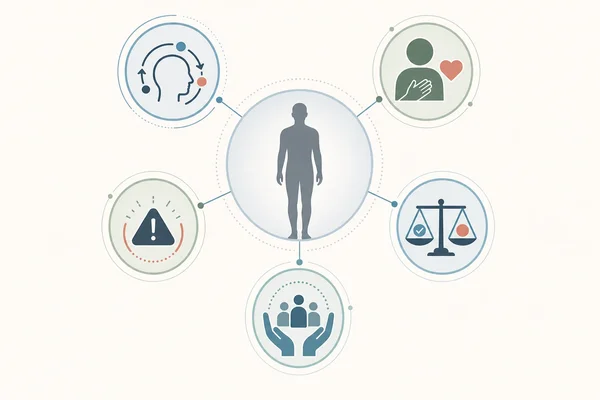
Common antisocial personality disorder symptoms are best understood as patterns rather than personality labels. They may include repeated lying, exploiting others, impulsive decisions, aggression, disregard for safety, irresponsibility, and little visible remorse after causing harm. Some people also have trouble maintaining steady work, finances, or relationships because consequences do not seem to change the pattern.
Three signs of antisocial behavior that everyday readers can remember are: repeated deception, repeated disregard for other people's rights, and repeated lack of repair after harm. "Repair" means taking responsibility, changing behavior, making amends where possible, and respecting boundaries in the future. Apologies without change are not strong evidence of repair.
It is also important to avoid using one sign in isolation. Someone may lie because they are ashamed, act impulsively during a crisis, or withdraw because of depression or anxiety. Substance use, trauma responses, bipolar episodes, ADHD, stress, and unsafe environments can all complicate behavior. That is why careful language matters. The goal is to notice patterns and seek appropriate support, not to pin a heavy label on a person after reading a checklist.
What Causes Antisocial Personality Disorder?
There is no single cause of antisocial personality disorder. Research and clinical education commonly describe a mix of biological vulnerability, early environment, development, and learned behavior. Genetics may affect temperament, impulse control, and emotional reactivity. Early abuse, neglect, unstable caregiving, exposure to violence, harsh discipline, or chronic stress may also increase risk for long-term antisocial patterns.
Childhood conduct problems are especially important in many clinical descriptions of ASPD. This does not mean every child with behavior problems will become an adult with ASPD. Early support, stable relationships, skill-building, school intervention, family help, and treatment for co-occurring conditions can change a young person's path. It also does not mean parents are automatically to blame. Development is complex, and simple blame usually hides more than it explains.
For adults, patterns may become harder to shift when they have been reinforced for years. If intimidation, deception, or irresponsibility has repeatedly helped someone avoid consequences, the behavior can become part of how they navigate life. Meaningful change usually requires motivation, accountability, and skilled professional support over time.

Antisocial vs Sociopath vs Psychopath
"Antisocial personality disorder vs sociopath" and "sociopath vs psychopath" are popular searches because people hear these terms in media. In clinical language, ASPD is the formal concept most closely related to persistent antisocial behavior. Sociopath is a common informal term often used for someone with ASPD-like traits. Psychopath is also not a standard DSM-5 label, but it is used in research and forensic discussions to describe traits such as callousness, shallow emotion, boldness, and predatory manipulation.
The terms overlap, but they are not identical. ASPD focuses heavily on observable behavior, such as repeated rule-breaking and disregard for others. Sociopath usually functions as a layperson word, and its meaning changes depending on who is using it. Psychopathy often refers to a narrower trait pattern that may include emotional coldness and calculated exploitation.
For everyday decision-making, the label is usually less useful than the behavior. If someone repeatedly lies, threatens, exploits, or ignores boundaries, you do not need to solve the sociopath vs psychopath debate before protecting your wellbeing. You can document what happens, set boundaries, seek outside support, and involve emergency services if there is immediate danger.
What Is an Antisocial Extrovert, Pessimist, or High-Functioning Person?
Related searches like "what is an antisocial extrovert" show why the term is confusing. An antisocial person does not have to be withdrawn. Someone can be outgoing, socially confident, persuasive, or popular and still show antisocial behavior if they use social skill to exploit, deceive, intimidate, or evade responsibility. Extroversion describes energy around people; antisocial behavior describes disregard for others.
"Antisocial pessimist" is usually not a clinical phrase. A pessimistic person may expect bad outcomes, distrust situations, or sound cynical. That is different from repeatedly violating others' rights. Cynicism can be unpleasant, but it is not the same as harmful antisocial conduct unless it is paired with exploitative or aggressive behavior.
"High-functioning" is also tricky. A person may hold a job, appear polished, or succeed socially while still causing harm in private. Functioning well in one area does not erase patterns in relationships, finances, safety, or responsibility. It simply means the pattern may be less obvious to outsiders.
How to Use This Information Carefully
If this topic feels personal, slow down before deciding what it means. Write down specific behaviors, dates, consequences, and repair attempts. Separate facts from interpretations. "They missed three rent payments and lied about the money" is more useful than "they are antisocial." For your own behavior, ask what you did, who was affected, what you avoided, and what would show genuine accountability next time.
If you are worried about your own pattern, consider speaking with a licensed mental health professional, especially if aggression, legal problems, substance use, or relationship harm keeps recurring. If you are worried about someone else, prioritize safety, boundaries, and outside support. You cannot force insight into another person, but you can choose what you document, what you tolerate, and when you seek help.
An educational screening experience can help organize reflection around ASPD-related traits, but it should be treated as informational. Use it as a conversation starter with yourself or a professional, not as a verdict. The most useful next step is usually not a label; it is a clearer view of the pattern, the risks, and the support that fits the situation.

FAQ
What does it mean to be an antisocial person?
In careful psychological language, it means a person shows repeated behavior that disregards other people's rights, safety, or boundaries. In casual speech, people may use it incorrectly to mean introverted or private. The clinical meaning is about harmful impact and repeated patterns, not simply preferring time alone.
What is considered antisocial?
Behavior may be considered antisocial when it repeatedly involves deception, intimidation, aggression, serious rule-breaking, exploitation, reckless disregard for safety, or lack of responsibility after harm. One conflict or one bad decision is not enough to define a person. Frequency, severity, context, and accountability matter.
What is an antisocial person like?
There is no single look. Some people with antisocial traits seem hostile or reckless. Others seem charming, confident, or successful. The shared concern is not appearance or social style; it is a repeated pattern of using, harming, deceiving, or disregarding others with limited repair.
What are three signs of antisocial behavior?
Three common signs are repeated lying for advantage, repeated disregard for other people's rights or safety, and repeated lack of remorse or meaningful repair after causing harm. These signs should be viewed as patterns over time, not as a quick label for one upsetting event.
What is an example of antisocial behavior?
An example would be repeatedly borrowing money through false stories, refusing to repay it, blaming the other person for objecting, and doing the same thing to new people. The antisocial concern is the repeated deception, exploitation, and lack of accountability.
Is antisocial personality disorder the same as being a sociopath?
Not exactly. ASPD is the formal clinical concept. Sociopath is an informal word people often use for ASPD-like traits, but it is less precise and can mean different things in different contexts. Psychopath is another overlapping term, often used for a more specific trait pattern in research or forensic discussion.
What is a good job for an antisocial person?
If someone really means asocial or introverted, jobs with autonomy, quiet focus, clear expectations, and limited social overload may fit well. If someone means harmful antisocial behavior, the better question is not job choice first; it is accountability, treatment support, and reducing risk to other people.